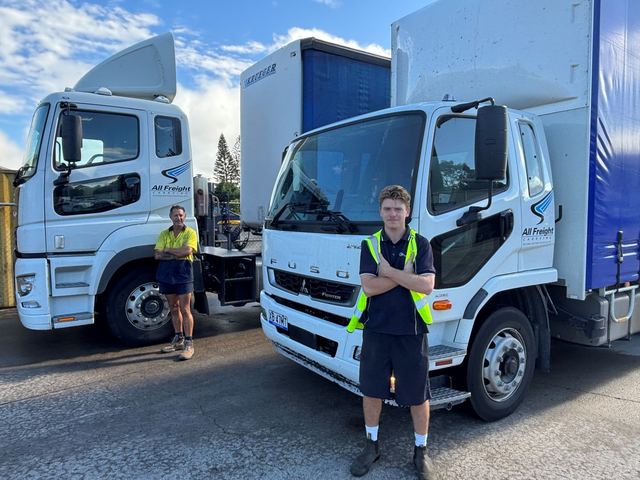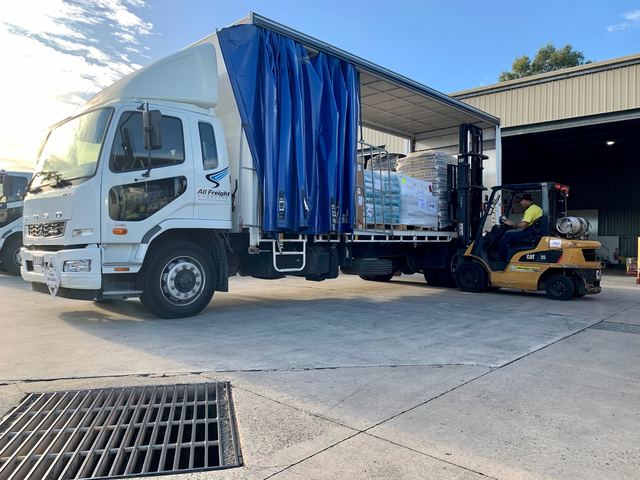



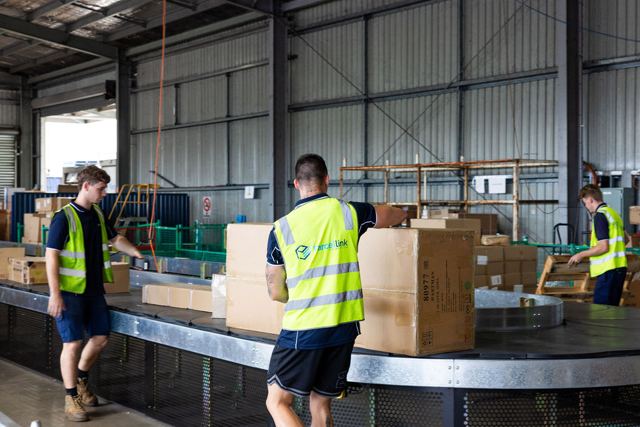
Freight travels through a network. It is loaded, unloaded, sorted, stacked and moved by forklift and by hand, often several times before it arrives. Good packaging is the single best way to make sure it arrives in the same condition it left. It is also a condition of carriage with every carrier.
Choose the right carton
- Use strong, double-walled cartons for anything heavy or valuable. Single-walled cartons are for light items only.
- Pick a carton just big enough for the item plus padding. Oversized cartons crush, and you pay for the empty space through cubic weight.
- Do not re-use cartons that are soft, torn or water-damaged.
Protect the contents
- Leave about 5 cm of padding on every side of the item.
- Fill every gap with bubble wrap, foam or crumpled paper so nothing moves when you shake the carton.
- Wrap fragile items individually and keep them away from the carton walls.
- Protect corners and edges of furniture, panels and appliances with cardboard or foam corners.
Seal and label
- Seal with strong packing tape using the “H” method across every seam.
- Label every item with the receiver’s name, address, suburb, postcode and phone number, and the item count (for example “2 of 3”).
- Remove or cover old labels and barcodes.
- “Fragile” and “This way up” labels are useful, but they are not a substitute for proper packaging.
Palletise small cartons
If you are sending more than a handful of cartons to the same address, putting them on a pallet is usually safer and often cheaper. Stack them square, heaviest at the bottom, with no overhang, then shrink-wrap the load to the pallet base. See standard pallet sizes in Australia.
Long lengths, panels and awkward items
- Bundle long lengths such as pipe, timber or extrusions together, and tape or strap them at regular intervals.
- Protect both ends, where most damage happens.
- Flat panels and glass should be crated or edge-protected and marked to travel on edge.
- Tell us the length when you book, as long freight needs the right vehicle.
Things that cause the most damage
- Overhanging cartons on pallets
- Under-filled cartons that collapse when stacked
- Heavy items packed on top of light ones
- Shrink wrap that does not reach the pallet base
- Missing or incorrect labels, which lead to extra handling and delays
Under our Conditions of Carriage, goods must be packaged to withstand normal handling in a road freight network. Packing properly protects your goods and avoids disputes.
Published by All Freight Carrying, Yandina, Sunshine Coast · 20 October 2026 · Last updated 25 October 2026