


If your business sends or receives freight on a truck, you are part of what the Heavy Vehicle National Law calls the Chain of Responsibility. That sounds heavier than it is.
For most businesses it comes down to a handful of habits you probably already have: declare the real weight, pack the freight properly, and agree delivery times that can actually be met. Nobody is expecting you to become a transport compliance expert.
This guide explains who is in the chain, what the duty actually asks of you, and what changed on 1 August 2026, so you can be confident your side is covered. It is general information, not legal advice.
Who is in the chain
The Chain of Responsibility covers everyone whose decisions affect how a heavy vehicle is driven. You are likely to be in it if you are any of the following:
- Consignor: you send the freight, or it is sent on your behalf.
- Consignee: you are the receiver named on the consignment.
- Packer: you put goods in a carton, container or pallet for transport.
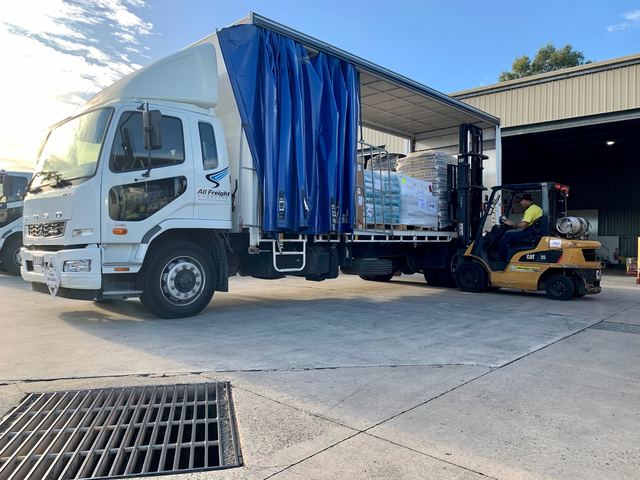
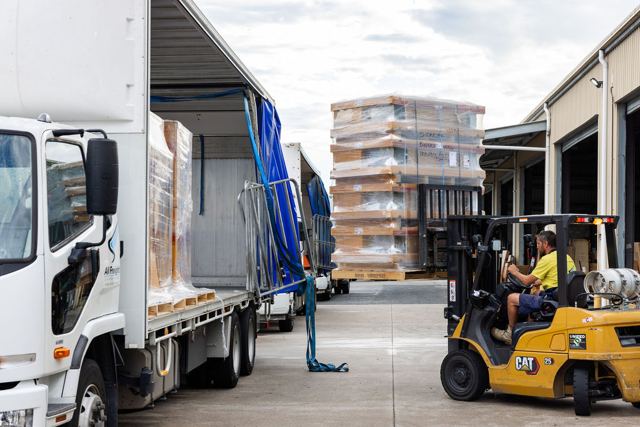
- Loader or unloader: your people or your forklift put freight on or take it off a vehicle.
- Loading manager: you manage the premises where loading or unloading happens.
- Scheduler: you set when freight is picked up or delivered.
- Operator, prime contractor, employer or driver: the transport side, which is where we sit.
A business can be several of these at once. A trade supplier that packs a pallet, loads it with its own forklift and tells the carrier it must be on site by 7am is a consignor, a packer, a loader and a scheduler.
The primary duty
Each party in the chain must ensure, so far as is reasonably practicable, the safety of its transport activities. That phrase matters. It does not mean guaranteeing nothing goes wrong. It means doing what a reasonable business in your position could do, weighing the risk against the cost and difficulty of fixing it.
Company executives carry a separate due diligence duty to make sure the business is meeting its obligations. An executive can be pursued even where the company is not prosecuted.
The six risk areas
- Speed: delivery times that cannot be met legally.
- Fatigue: schedules, queues and waiting time that push a driver past their hours.
- Mass: pallets or loads heavier than declared, or heavier than the vehicle can legally carry.
- Dimension: freight that makes the vehicle over-height, over-width or over-length.
- Loading and restraint: freight stacked, wrapped or restrained so it can shift in transit.
- Vehicle standards: roadworthiness and maintenance of the vehicle itself.
What this means in practice
For most small and medium businesses, meeting the duty is a handful of practical habits rather than a compliance department.
- Declare real weights and dimensions. Guessing is a mass and dimension risk, and it is also how you end up re-charged. See cubic weight.
- Pack and restrain properly. Load square to the pallet, nothing overhanging, wrapped or strapped so it cannot shift. See our packaging guide.
- Set delivery times that are legally achievable. If a time can only be met by speeding or by a driver working past their hours, it is a CoR issue, not a service issue. Ask your carrier what is realistic.
- Do not hold drivers up. Long waits at your dock eat into driving hours and create fatigue risk. If your site is slow at certain times, tell the carrier so the run can be planned around it.
- Make your loading area safe. Firm, level ground, clear access, and someone available to help or direct.
- Ask your carrier the right questions. How drivers are engaged and paid, how fatigue is managed, how vehicles are maintained, and what accreditation they hold. A carrier that cannot answer is a risk you are carrying.
- Write it down. If you are ever asked what you did to meet your duty, the answer needs to be something more than “we assumed the carrier handled it”.
What changed on 1 August 2026
The amended Heavy Vehicle National Law commenced on 1 August 2026 in Queensland, New South Wales, Victoria, South Australia, Tasmania and the ACT. The changes most relevant to businesses that send freight are:
- “Unfit to drive” now covers more than fatigue. A driver of a vehicle over 4.5 tonnes must not drive while unfit for any reason, including illness, injury, drugs or alcohol. Parties in the chain must make sure their own business practices do not cause or encourage someone to drive while unfit.
- Mass limits increased by one tonne for combinations up to and including 55 tonnes and two tonnes above 55 tonnes.
- General access length rose from 19 to 20 metres.
- Accreditation changed. The National Heavy Vehicle Accreditation Scheme is transitioning to the Heavy Vehicle Accreditation scheme, and an approved Safety Management System is now compulsory for operators seeking accreditation.
- Fatigue accreditation changed. Alternative Compliance Accreditation – Fatigue (ACA-Fatigue) replaced the previous fatigue accreditation modules, and the written work diary was updated.
- 71 penalty amounts changed on 1 August 2026: 50 increased and 21 decreased.
A note on penalties
Breaches of the primary duty are graded in three categories, rising with the seriousness of the risk created. The maximums reach $150,000 for a corporation in the lowest category and $3 million for reckless conduct that exposes someone to a risk of death or serious injury.
Those are maximum penalties for serious failures, not what happens over a wonky pallet. The reason to mention them at all is simply that the duty is real and it reaches businesses that never touch a steering wheel. Doing the sensible things in the list above is what meeting it looks like day to day.
Why the cheapest carrier can be the expensive one
A rate well below everyone else’s is usually funded somewhere: longer hours, older vehicles, or drivers engaged in ways that shift cost onto them. If that carrier is moving your freight, their practices sit inside your chain. This is one of the reasons price alone is a poor way to choose a carrier, which we cover in how to choose a freight company.
Where we sit
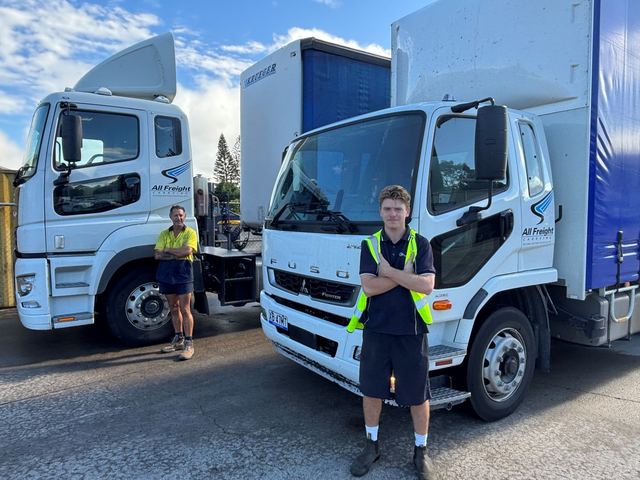
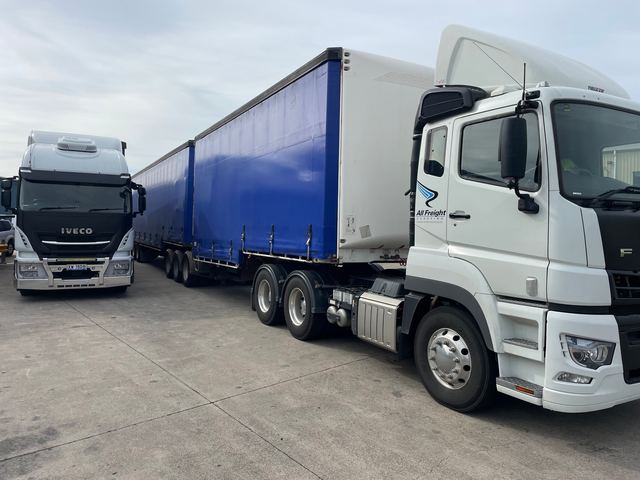
We are the operator and the employer in the chain for the freight we carry. Our drivers are employees on fixed runs, our vehicles are late-model and dealer-serviced, and every consignment is scanned. If you need to document what you did to meet your own duty, ask us and we will tell you how our side works.
The official source for all of this is the National Heavy Vehicle Regulator. For your own obligations, get advice specific to your business.
Published by All Freight Carrying, Yandina, Sunshine Coast · 21 October 2026 · Last updated 25 October 2026