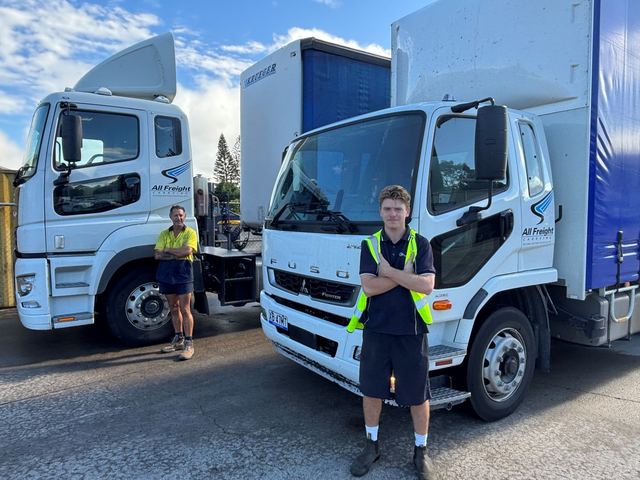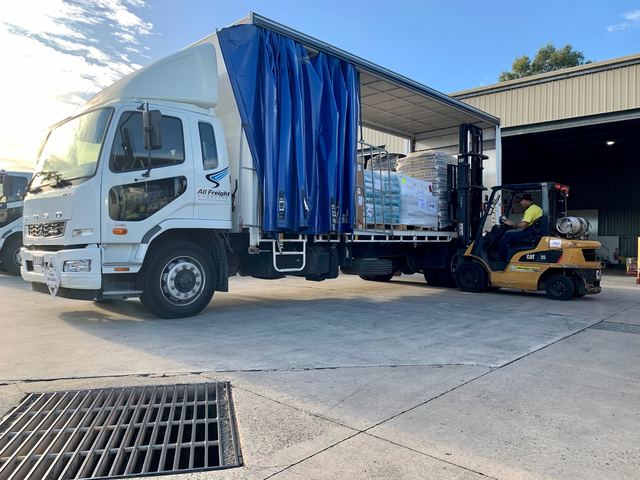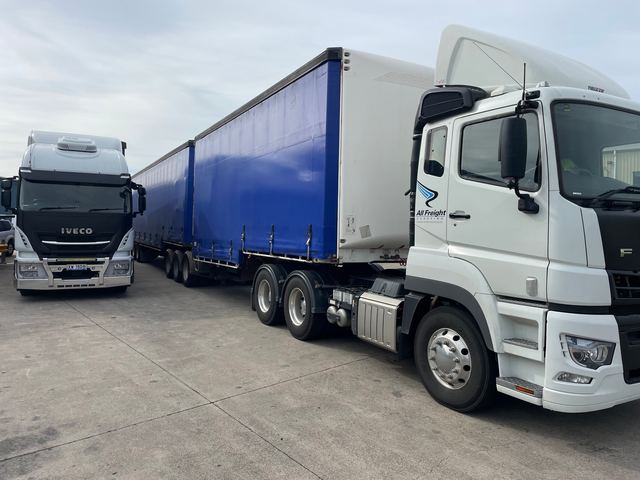



A futile delivery is an attempt that fails before the freight can be handed over, and All Freight Carrying prevents most of them with information that costs nothing: a correct address, a contact who answers the phone, the receiver’s hours, and an honest description of what is at the other end. Every held and futile consignment on our network is monitored daily, so a failed attempt is followed up that day rather than discovered a week later. This guide explains what the statuses mean, why attempts fail, and how to stop it happening to your freight.
What “futile” means
Futile is the freight industry’s word for a wasted trip. Under our Conditions of Carriage, a pickup or delivery is futile where it fails because of an incorrect or incomplete address, goods that are not ready or not as declared, an unavailable or unwilling receiver, a closed site, refusal of the goods, or a site that is unsafe or unsuitable for the vehicle required. The driver attended, the freight could not be handed over, and the trip has to be done again.
A futile attempt is chargeable, and so is the redelivery, because both consume a vehicle, a driver and a slot on a run that other receivers were waiting for. That is why the information on the booking matters so much: almost every futile delivery was preventable at the point the consignment was created.
What “held” means
Held is different, and usually less serious. A held consignment is sitting in our depot rather than out on a vehicle, waiting on something before it can be delivered. Common reasons are a receiver who has asked us to hold the freight until they are ready, an address being confirmed, a delivery that needs an appointment or a booking, freight waiting for the next service day in a set-day area, or an outstanding payment on a consignment sent without a credit account.
Held is a holding pattern, not a failure, and it is cleared by a phone call or an email far more often than by another attempt. You can see both statuses on your consignment through our tracking and technology page.
The causes we see most
- Closed premises. Shops shut on a weekday, trades sites that knock off early, businesses closed over a holiday period, and offices with receiving hours that do not match when the run reaches them.
- Wrong or incomplete address. A missing unit, suite or shop number, an industrial estate address without a street number, an old address for a business that has moved, or a street name that exists in several suburbs.
- Nobody to receive the freight. A home address with nobody there and no authority to leave, a site with no supervisor, or a warehouse where the only person who can sign is away.
- No forklift, no dock and no tailgate booked. A pallet arrives on a flat-tray vehicle at an address with no way of getting it off. This is the single most common avoidable cause, and it is solved by asking for a tailgate delivery at the time of booking.
- Access the vehicle cannot manage. A narrow or steep driveway, a low awning or car park, no turning space for a rigid truck, soft or unmade ground, a locked gate with no code, or a street closed for works.
- The receiver refuses the goods. The wrong product, a short or damaged order, a cancelled purchase order, or a receiver who will not accept freight without a booking reference.
- Goods not ready at pickup. Freight still being packed, wrapped or labelled, or a consignment that turns out to be a different size, weight or item count from the one booked.
- A site the driver cannot safely enter. Our drivers may decline to enter a site, or to load or unload, where they reasonably consider it unsafe. The attempt is then treated as futile.
What happens after a futile attempt
The driver records the reason with a scan and, where it helps, a photograph, so there is a record of what was found at the address. The freight comes back to our Yandina depot on the vehicle and is checked against the consignment that evening. Our office then contacts the sender, the receiver or both to work out what should happen next, which is usually one of four things:
- Redelivery on the next run for that area, once the problem has been fixed.
- An appointment or a hold so the freight goes out on a day and in a way that suits the receiver.
- Collection from the depot at 48 Central Park Drive, Yandina, during office hours.
- Return to sender, where the receiver will not take the goods or cannot be reached.
Freight held after a futile delivery is stored at the owner’s risk. The first 72 hours of depot storage are free, after which storage is charged. Redelivery, further attempts and returns are at the sender’s cost, so the quickest and cheapest outcome is always a first attempt that works.
How we monitor held and futile freight
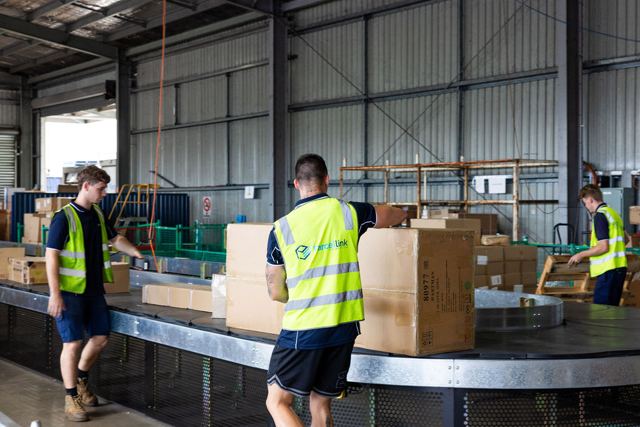
Scanning is one of the most important jobs in our business. Every consignment is scanned at pickup, at the depot and at delivery, and every scan status is checked daily — including everything sitting as held, futile or unable to be accessed. That daily check is what stops a problem consignment going quiet. It gets looked at the day it fails, not when somebody rings to ask where their freight is. Senders with an account also get the exception reported to them rather than having to find it themselves.
Eleven details that prevent most failed deliveries
- Give the full delivery address, including the unit, suite, shop or warehouse number.
- Put a contact name and a mobile number on the consignment for the person who will actually receive it.
- Tell us the receiving hours, and any day the site is closed or cannot take freight.
- Say whether there is a forklift or a dock. If there is neither, ask for a tailgate when you book.
- Declare the real dimensions, weight and item count. Freight that is heavier or larger than declared may need a different vehicle than the one sent.
- Warn us about access: narrow driveways, steep or unsealed ground, height limits, gate codes, locked compounds and anything a driver would not expect.
- Include the purchase order, booking reference or job number the receiver needs before they will accept the goods.
- Label every item on at least two sides with the receiver’s name, address, suburb, postcode and phone number, and remove old labels.
- For homes, give authority-to-leave instructions and a safe place, or ask us to arrange a time. Our guide to business and residential delivery covers the differences.
- Have the freight ready, wrapped and labelled before the pickup vehicle arrives.
- Tell the receiver the freight is coming. A receiver who is expecting a delivery solves half of these problems without us.
If a delivery has failed
Call us on 1300 882 117 between 8:00am and 4:00pm Monday to Friday, or email cs@allfreightcarrying.com.au with the consignment number. Tell us what changed — a corrected address, a contact who will be there, a tailgate, an appointment or a different receiving day — and we will put it on the next run for that area. If you are setting up a new account or a new sending pattern, it is worth sorting out the delivery details once, properly, at the start: ask us for a quote and tell us how your receivers take freight.
Published by All Freight Carrying, Yandina, Sunshine Coast · 31 October 2026 · Last updated 31 October 2026